
Key Takeaways
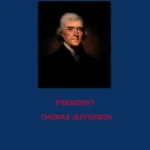
Thomas Jefferson was the primary author of the Declaration of Independence and the 3rd President (1801–1809), serving as the first leader of the “Democratic-Republican” party.
His presidency is defined by the Louisiana Purchase (1803), a $15 million deal with Napoleon that doubled the size of the United States overnight, adding 828,000 square miles of territory.
He commissioned the Lewis and Clark Expedition to explore this new western frontier, fulfilling his vision of America as an agrarian “Empire of Liberty” stretching to the Pacific.
His legacy is marred by the great contradiction: He wrote “all men are created equal” yet enslaved over 600 people during his lifetime, including Sally Hemings, with whom he fathered at least six children.
“He was the architect of American liberty and the owner of American slaves. Thomas Jefferson embodies the greatest triumphs and the deepest sins of the nation’s founding.”
Thomas Jefferson: The Man of Contradictions
If Washington was the Sword and Adams was the Voice, Thomas Jefferson was the Pen. A polymath who spoke multiple languages, designed his own home (Monticello), and founded the University of Virginia, Jefferson was the intellectual giant of the Founding Fathers. He viewed his election in 1800 as the “Second American Revolution,” a victory for the common man against the elite Federalists.
As President, Jefferson famously walked to his own inauguration rather than riding in a carriage, signaling a new era of republican simplicity. His greatest achievement, however, required him to abandon his own principles. A strict “Constitutionalist” who believed the federal government had no power beyond what was written in the text, Jefferson ignored his own rules in 1803 to buy the Louisiana Territory from France. He knew the Constitution didn’t explicitly allow him to buy land, but he knew the deal—3 cents an acre for the entire middle of the continent—was too good to pass up.
His second term was defined by failure. Trying to keep America out of the Napoleonic Wars, he signed the Embargo Act of 1807, banning all foreign trade. It was an economic disaster that crushed the American economy (exports fell from $108 million to $22 million) and nearly caused New England to secede.
Jefferson died on July 4, 1826—the 50th anniversary of the Declaration of Independence—just hours before his frenemy John Adams. But his post-presidency is haunted by the shadow of slavery. Unlike Washington, Jefferson did not free his enslaved workforce in his will. He died deeply in debt, and the human beings he owned were sold at auction to pay his creditors, separating families forever.
Constituency Context: The United States (1803 Census Est.)
Population: ~6 Million.
The Big Change: Ohio became the 17th state in 1803, marking the first time the U.S. expanded into the Northwest Territory.
The Map: With the Louisiana Purchase, the U.S. border moved from the Mississippi River to the Rocky Mountains.
Demographics: The enslaved population grew to over 1 million during his presidency. The importation of enslaved people was constitutionally banned in 1808, a law Jefferson signed, though the internal trade exploded.
Technology: The economy was almost entirely agrarian. Jefferson hated cities and factories, believing that “cultivators of the earth are the most valuable citizens.”
Source: U.S. Census Bureau & Monticello Research
Sources Used
Monticello (Official Site): https://www.monticello.org/thomas-jefferson/
The White House Historical Association: https://www.whitehousehistory.org/bios/thomas-jefferson
Library of Congress (Louisiana Purchase): https://www.loc.gov/rr/program/bib/ourdocs/Louisiana.html